









Portfolio Intelligence podcast | How to approach alternatives and private credit today
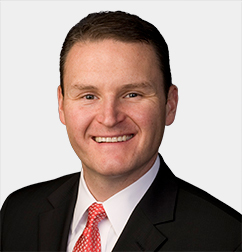
In this new episode, John Bryson is joined by David T. Vincent, CFA, CAIA, Co-Head of Alternatives Intermediary Distribution at Manulife Investment Management, for a conversation on how investors can approach today’s alternatives market. They look beyond the headlines to discuss evolving market dynamics, investor expectations, and emerging strategies.

Subscribe: Spotify | Apple | Explore all Portfolio Intelligence podcasts
As investors assess both the opportunities and challenges in private credit, David joins the podcast to discuss how the market has evolved and what investors should consider as they look beyond traditional asset classes.
He shares his perspective on the growth of private credit and investor concerns around liquidity and concentration. The conversation also explores asset-based finance and hard asset strategies, highlighting the questions investors can ask to better understand risk, structure, and portfolio fit.
1 What’s happening in private credit today?
David: There’s growing recognition that many alternative strategies are concentrated in floating rate loans to private companies. This creates exposure to corporate credit and interest rates. With rates declining and uncertainty around inflation, recession risk, and consumer spending, investors are reassessing that exposure. What we’re seeing now is that advisors and investors are looking for additional strategies that complement private credit by offering similar return potential with different risk profiles.
2 How would you address concerns of a potential bubble in private credit?
David: When people see the rapid growth in private credit assets, it raises the question of whether the space is in a bubble. What we’re really seeing is a shift in lending from banks to alternative lenders. While it can feel like sudden growth, it’s largely a shift in who provides capital. Private credit should grow alongside the economy, especially as more companies remain private longer.
3 What alternative strategies may investors be overlooking right now?
David: The most interest right now is in hard asset strategies. These tend to benefit from inflation, supply chain disruptions, and tariffs. There is a concept often referred to as hard assets with low obsolescence, meaning long lived, tangible assets such as buildings or airplanes. These assets have intrinsic value. In a default, they can often be leased, sold, or repurposed.
About the Portfolio Intelligence podcast
The Portfolio Intelligence podcast features interviews with asset allocation experts, portfolio construction specialists, and investment veterans from across Manulife John Hancock’s multimanager network. Hosted by John Bryson, head of investment consulting at Manulife John Hancock Investments, the dynamic discussion explores ideas advisors can use today to build their business while helping their clients pursue better investment outcomes.
Important Disclosures
Important Disclosures
This podcast is being brought to you by John Hancock Investment Management Distributors LLC, member FINRA, SIPC. The views and opinions expressed in this podcast are those of the speakers, are subject to change as market and other conditions warrant, and do not constitute investment advice or a recommendation regarding any specific product or security. There is no guarantee that any investment strategy discussed will be successful or achieve any particular level of results. Any economic or market performance information is historical and is not indicative of future results, and no forecasts are guaranteed. Investing involves risks, including the potential loss of principal.
MF 5401113
Transcript
Transcript
John Bryson:
Hello and welcome to the Portfolio Intelligence Podcast. I'm your host, John Bryson, head of investment consulting and education savings at Manulife, John Hancock Investments. Today is April 9th, 2026, and we're diving into alternatives, a part of the market that's getting a lot of headlines right now and not always for the right reasons.
My guest is David Vincent, co‑head of alternatives intermediary distribution at Manulife, John Hancock, someone who spent a meaningful part of his career working across the investment landscape, building, evaluating, and helping advisors understand where these alternative strategies can fit and, more importantly, where they may not. And that context really matters today, because with this podcast, we want to go beyond the headlines and really understand the challenges and opportunities in this space right now. David, welcome to the podcast.
David Vincent:
Thank you for having me, John. Very excited to be here today.
John Bryson:
Excellent. David, maybe you can start by telling us about the Manulife John Hancock alternatives platform.
David Vincent:
Absolutely. The story starts with Manulife being one of the largest insurance companies in the world. As part of that, we manage a significant amount of money on behalf of clients. We have just under one trillion dollars of total assets under management and advisement. We have a large global footprint.
When people hear the John Hancock name, they don’t always think about alternatives, but we actually manage about $130 billion at Manulife in true private market strategies. There are three primary ways that we work with managers and investment strategies. In some cases, we have internal capabilities we bring to market. In other cases, we work with third‑party managers as sub‑advisors. In some situations, we identify firms whose culture and strategy align well with ours and we acquire them.
Over the past two years, we’ve been in the news quite a bit. We acquired KCS, an alternative credit manager out of London, and more recently we closed on Canvas Credit Partners. These are two excellent managers and we’re thrilled to have them as part of the team. We’re growing, we’re building, and we’re working to create a world‑class platform.
John Bryson:
That’s information some people know, but not everyone does, and I’m glad you shared it. I want to dig into private credit right now. It’s been one of the biggest allocation stories over the last several years. Can you tell us what’s going on in the private credit world?
David Vincent:
There’s a lot going on if you read the headlines. When you step back, this has been one of the biggest stories of the past few years. The evolution of private credit as an asset class for individual investors goes back to the financial crisis. Regulations placed on banks limited their ability to lend. Demand for loans did not decline, but supply did, and other firms stepped in to fill that gap.
Banks were historically involved because these loans can deliver attractive returns, strong income, and cash flow, and they generally perform well across many market environments. Over the last several years, many individual investors have adopted these strategies and have had positive experiences with low correlation to stocks and bonds, high income, low volatility, and low default rates.
Today, there is growing recognition that many of the strategies launched over the past few years are concentrated in similar areas, particularly floating‑rate loans to private companies. This creates exposure to corporate credit and interest rates. With rates declining and uncertainty around inflation, recession risk, and consumer spending, investors are reassessing that exposure.
This exposure I s not inherently bad, as most public credit portfolios also contain corporate credit and floating‑rate exposure. What we’re seeing now is that advisors and investors want to maintain the experience they’ve had but are looking for additional strategies that complement private credit by offering similar return potential with different risk profiles. That’s the next phase of the private credit story.
John Bryson:
Working in this space for so long, how do you address concerns people have about whether private credit is in a bubble or about getting their money out when they need it?
David Vincent:
Those are two questions that come up almost every day. When people see the rapid growth in private credit assets, it raises the question of whether the space is in a bubble. What we’re really seeing is a shift in lending from banks to alternative lenders. While it can feel like sudden growth, it is largely a change in who is providing capital.
Private credit should grow alongside the economy, especially as more companies remain private longer. The direct lending market is estimated at around one point eight trillion dollars, which is less than five percent of the approximately forty trillion-dollar global credit market. In that context, the size is less concerning.
Liquidity is also top of mind. These funds are semi‑liquid vehicles, and setting expectations is critical. We have not seen broad deterioration in loan quality across the industry. What we are seeing is concern that other investors are redeeming, which creates a herd mentality.
These funds were never designed to offer daily liquidity. The underlying assets are illiquid by nature. Headlines may say a fund is limiting redemptions, but another way to view it is that the fund is operating exactly as disclosed. That highlights the importance of understanding the strategy and the vehicle structure before investing.
John Bryson:
Private credit discussions often focus on direct lending, but there’s more to the space. What strategies do you think investors may be overlooking?
David Vincent:
Private credit has become closely associated with direct lending, but we’re now seeing a broader definition. One area receiving increased attention is asset‑based finance. Different firms may label it differently, but it encompasses several distinct approaches.
Asset‑based finance can be viewed in three categories. The first is financial assets such as credit card debt or student loans, where cash flows come from pools of loans without specific collateral. The second is hard‑asset lending, which includes commercial and residential real estate, transportation assets like airplanes, and heavy equipment. These loans are backed by physical collateral that can be repossessed in a default.
The third category is specialty finance, which includes strategies like music royalties, litigation finance, and art lending. Each category has different risk characteristics and cash‑flow structures, making it important to understand which type of exposure a strategy provides.
David Vincent:
The most interest right now is in hard‑asset strategies. These tend to benefit from inflation, supply‑chain disruptions, and tariffs. There is a concept often referred to as hard assets with low obsolescence, meaning long‑lived, tangible assets such as buildings or airplanes.
These assets have intrinsic value. In a default, they can often be leased, sold, or repurposed. Even in extreme cases, their component materials may establish a valuation floor. Inflation can support hard‑asset values, and tariffs or supply‑chain disruptions can make existing assets more valuable due to scarcity.
Low obsolescence is important because it increases confidence that the asset will retain economic relevance over time. While there are no guarantees, tangible collateral can mitigate downside risk in uncertain markets.
John Bryson:
What questions should investors be asking to better understand these strategies before investing?
David Vincent:
Asking questions is critical. Investors don’t need complex financial modeling, but they should understand how a strategy earns money and what risks it carries. One of the most important questions is how a manager defines an asset. There is a meaningful difference between a physical asset such as an airplane and a pool of unsecured loans, even though both may be labeled as assets.
Another key question concerns leverage. Investors should understand how much leverage is used and why it is used. Leverage can enhance returns, but excessive leverage can increase risk.
It’s also important to ask where the income comes from. Ideally, distributions are generated from underlying asset cash flows. Investors should understand whether income is sustainable and how accounting classifications such as return of capital may affect reported yields.
Finally, investors should pay attention to how managers answer questions. Transparency matters. A quality manager should be open and clear. Even when answers are reassuring, risk still exists, and investors should remain thoughtful in their decision‑making.
John Bryson:
David, this has been incredibly insightful. One of our goals with the Portfolio Intelligence Podcast is to cut through market noise and make complex ideas understandable and actionable, and you did exactly that. Thank you for joining us today.
David Vincent:
Thank you for having me, John. This was a pleasure.
John Bryson:
We’ll do it again sometime. If you liked what you heard today, please subscribe to the Portfolio Intelligence Podcast. If you’d like to learn more about the alternative asset classes we offer or our perspectives on market opportunities, please visit our website. Thanks for listening.
This podcast is brought to you by John Hancock Investment Management Distributors, LLC, member FINRA and SIPC. The views expressed are those of the speakers and are subject to change. They do not constitute investment advice or a recommendation. There is no guarantee that any investment strategy discussed will be successful. Past performance is not indicative of future results. Investing involves risk, including the potential loss of principal. Alternative investments involve substantial risk, limited liquidity, and complex strategies and may not be suitable for all investors.