









Portfolio Intelligence podcast | The role of alternative investments in modern portfolios
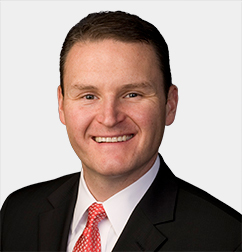
Alternative investments are gaining prominence as a tool to address gaps in traditional portfolios. Pattie Carrington, global head of product development at Manulife Wealth and Asset Management, discusses the evolution of alternative products, their role in portfolios, and how innovation can make them more accessible to retail investors.

Subscribe: Spotify | Apple | Explore all Portfolio Intelligence podcasts
As the investment landscape continues to evolve, alternative investments are playing a larger role in portfolio construction. In this episode, host John Bryson talks with Pattie about the factors driving increased interest in this segment.
Pattie shares insight into the development of new product structures, advances in technology, and the expanding access to private markets. She also addresses how the industry is responding to investor demand through innovation.
1 What are alternative investments?
Pattie: Alternative investments are nontraditional assets outside of stocks and bonds, such as private equity, private credit, hedge funds, and real assets. They’re typically less liquid, more complex and are structured to enhance risk/return profiles. They generally provide diversification and increased income. These differ from liquid alternatives, such as long/short equity, market neutral, managed futures, and more derivative-related strategies.
2 What investor needs do alternative investments address?
Pattie: Alternative investments are designed to meet investor needs and market gaps that traditional stocks and bonds may not. They provide diversification, which helps reduce portfolio concentration risk, as well as inflation protection. They also offer higher return potential through access to unique private market opportunities. Lastly, the illiquidity premium is a key feature, which is the price paid for additional returns in exchange for locking up capital for longer.
3 What’s the future of alternative investment product development?
Pattie: In one word: democratization. We’ll see increased retail access to private markets, technology-driven distribution, tokenization, blockchain for settlement and customization. We’ll also see the emergence of alternative model portfolios that blend private and public assets. The industry is also focusing on innovations in liquidity and evolving fee structures.
About the Portfolio Intelligence podcast
The Portfolio Intelligence podcast features interviews with asset allocation experts, portfolio construction specialists, and investment veterans from across Manulife John Hancock’s multimanager network. Hosted by John Bryson, head of investment consulting, investment data analytics, and education savings, at Manulife John Hancock Investments, the dynamic discussion explores ideas advisors can use today to build their business while helping their clients pursue better investment outcomes.
Important disclosures
Important disclosures
This podcast is being brought to you by John Hancock Investment Management Distributors LLC, member FINRA, SIPC. The views and opinions expressed in this podcast are those of the speakers, are subject to change as market and other conditions warrant, and do not constitute investment advice or a recommendation regarding any specific product or security. There is no guarantee that any investment strategy discussed will be successful or achieve any particular level of results. Any economic or market performance information is historical and is not indicative of future results, and no forecasts are guaranteed. Investing involves risks, including the potential loss of principal.
MF5044348
Transcript
Transcript
John
Welcome to the Portfolio Intelligence podcast. I’m your host, John Bryson, head of investment consulting and education savings at Manulife John Hancock Investments. Today, I’m interested in diving into the opportunities in the product development of alternative investments.
I want to learn more about how new structures are evolving to meet client needs. I want to learn what it takes to get access to private markets in a way that's transparent, efficient, and investor friendly. To do so, I’m thrilled to welcome our guest, Pattie Carrington, head of global product development at Manulife Wealth and Asset Management. Pattie leads the firm’s global product development agenda, partnering across channels to drive innovation, evolving existing offerings, and building solutions aligned to client outcomes. Pattie, welcome to the podcast.
Pattie
John, thanks so much for having me today. And I’m really excited to also dive into this thrilling topic.
John
Excellent. So, from a product development standpoint, when you wear that hat, what defines an alternative investment and how does that shape how these products are built in marketing?
Pattie
Alternatives are typically nontraditional assets outside of stocks and bonds. Think private equity, private credit, hedge funds, and real assets. They’re built with less liquidity than you'll find in your traditional assets, and they're often more complex. Therefore, these products are structured to enhance the risk/return profiles for clients. Alternative products generally provide diversification and increased levels of income. These products are not to be confused with the liquid alternative strategies, which employ alternative approaches such as long/short equity, market neutral, managed futures, and more derivative-related strategies. These aim to generate returns that are less correlated with traditional stocks and bonds as well, but they're very different from the alternatives we're talking about today.
John
Got it, got it. All right, so what investor needs or maybe market gaps are alternative products typically designed to address?
Pattie
Alternative investment products are typically designed to address specific investor needs and market gaps that traditional stocks and bonds may not fully satisfy. We can bucket those into essentially four major categories: diversification, inflation, enhanced return, as well as the illiquidity premium that's related to the enhanced return.
So, diversification beyond traditional assets for the potential to reduce portfolio concentration risk: traditional portfolios often rely heavily, as you know, on equity and fixed income, which can be correlated during market stresses. Alternatives, like private asset classes such as private equity, hedge funds, and real assets that we're talking about today, provide exposure to different risk/return drivers.
Also, inflation protection to preserve the real purchasing power of a dollar: bonds and cash can lose value in inflationary environments. These real assets that we're talking about, and inflation-linked strategies, can help hedge that inflation risk.
And then, enhanced return potential and access to almost $12 trillion of unique opportunities through companies which choose not to go public: public markets may offer limited opportunities in efficient markets, while private equity, venture capital, and opportunistic credit strategies aim for higher returns through liquidity and active management.
And lastly, and related to that, is the illiquidity premium…is the price for the additional return for locking up capital for longer periods of time. So, that's why these products are a valuable approach to filling gaps in our investors’ needs.
John
All right, now a lot of conversations I have are centered around the fact that alternatives are newer to the retail audience, but they've been around a long time. Which types of alternative investment products are most mature in terms of their structure and distribution?
Pattie
Well, hedge funds are really the most mature, with a very long history since really the mid-20th century, as they have standardized structures in the form of limited partnerships. These structures have well-developed distribution through private banks, wealth managers, and institutional platforms—less so for the retail investor, although increasingly through feeder funds. Private equity also has a mature fund structure in the form of a general partner-limited partnership structure through closed-ended funds, often locking up for 10 to 12 years. So, these have strong institutional distribution and, again, potentially growing retail access through semi-liquid evergreen and feeder fund structures. And then you'll also find similarity with private real estate and infrastructure investments, increasingly to the retail investor, although more traditionally in these more locked-up private investment structures for institutions.
And then I guess I would say the growing but less certain market is that of digital assets and crypto funds.
John
Okay, and as this alternative market grows, there's more retail interest. Where are we seeing the most innovations in terms of product design?
Pattie
Well, in the democratization or extension of all these alternative assets mentioned—private credit, infrastructure, asset-backed lending—to the spectrum of investors, including retail. Tokenization and fractional ownership for private assets are also super innovative.
And the hybrid structures combining public and private exposures—we’ve even seen these in, believe it or not, ETFs, which are your intraday most liquid structure for the retail investor. But we see alternatives and innovation in the ETF structure as well, believe it or not.
John
Okay, so the market is getting more and more creative trying to reach the end investor on a platform that they're familiar with.
Pattie
Exactly.
John
Excellent. So, which type of alternative product categories are experiencing the fastest growth and what do you think is driving that interest and demand?
Pattie
Well, private equity driven by companies staying private longer, they're reducing the public equity supply as well as private credit is equally among the fastest growing. And that's because since 2008, banks retrenched from leveraged lending, creating these financing gaps. Real assets like real estate and infrastructure are also seeing tremendous growth because of their inflation protection and stable income. So, really across the board, we're seeing the growth in these asset classes as well as what I mentioned on the digital…digital assets now represent over 10% of the alternative market and growing based on sort of the crypto adoption and institutional acceptance as well as fast SEC and regulatory changes.
John
Okay, so speaking about the investor and the product development side of things, what alternative types do you think are underutilized and maybe why?
Pattie
Well, I would say right now it could be interpreted as generally an underallocation to alternative investments for the retail investor at really a stagnant under 5% allocation. So I would say in general, the retail investor is underallocated. Infrastructure is probably, although it's growing, I would say the most underrepresented, and that's because of the complex deal structuring and long duration—making it hard to package for the retail investor.
However, as I said, there's growing demand for sustainable infrastructure and energy transition financing given the rapid adoption of AI. So we're seeing the infrastructure asset class in tender semi-liquid interval fund structure for broader access. Also, you know, niche real estate, real assets like timber and farmland are underutilized based on the very illiquid nature and the operational intention nature of managing forestry and farmland, as well as the capacity. It’s a tight capacity asset class. So I would say infrastructure and then timber and farmland.
John
Okay, fascinating. All assets that are well exposed to in the institutional space but not the retail space.
So going back to that, you know most retail investors probably have 5% or under allocated to alternatives. What do you think are the biggest barriers in scaling these underutilized products? Is it distribution, regulation? Is it investor understanding of the marketplace or a combination of all of them?
Pattie
It’s really a combination of all, but I think really the biggest is the education gap. You know, because these asset classes haven't been available, there's just really a lack of knowledge about it. And so advisors and clients need clarity on the risks and liquidity associated, the regulatory constraints. For these retail investors, you know, it's really on us to really provide more transparency on the value of this asset class with increased reporting, valuation, transparency, fee structures, and compliance. So it's really, it's an exciting time to provide and partner with our clients to educate.
John
Okay, well, hopefully this podcast goes a long way in the education side. That’s what we hope to do. And I know we’ve got a ton of resources on our website, so I'll plug that at the end.
But from your standpoint, a product developer’s standpoint, what are you doing to make alternatives and others doing to make alternatives more accessible to the non-institutional market?
Pattie
Well, the key structures are really the growth of the interval fund and the tender offer for semi-liquid access, as well as the more common, say, BDC. And you know where I actually think it's quite exciting for the retail investor—and I would put my money where my mouth is—is smaller allocations as well in your traditional mutual fund and ETFs. As I mentioned earlier, you'll see some innovative structures where it's the balance of, is it the 70/30 allocation, 80/20…but depending on investors’ needs, they can have a more pure allocation in an intervals fund structure, or they can have a more liquid structure with less exposure to that.
So, depending on where you want to dip your toe…an investor wants to dip their toe, there are many different approaches here. And the industry is working to lower minimums and deliver in very innovative ways, such as digital platforms for subscription and reporting. So it's a rapidly evolving market, and we're trying to give a menu of options depending on the needs of the investor.
John
That’s great. I mean, you and I know that the interval fund and tender offer funds are kind of—I call them in-betweeners. Like, they're in between a mutual fund and then the completely or less liquid drawdown fund that you may need seven, 10, or 12 years to get your money back. And I do think there's some education gap in that space that we can continue to help people to say it's a lot like mutual funds, a little bit different in terms of how frequently you can get your money. But conceptually, you're thinking about them the same way.
Pattie
That’s right. And you're compensated, really—so sorry to interrupt you—and you're compensated for that. So, the illiquidity is not really necessarily a bad thing, right? It’s because you're getting compensated for it. It’s just that as long as we're patient for that with our money, you will get compensated.
John
Yeah, exactly. That trade-off is certainly well worth the wait in many cases. So, let's talk a little bit more—what innovations are emerging around things like fees, reporting, investor protection in alternatives? Because I know that's of interest to many listeners.
Pattie
Yes. So, there is a shift from what I'll call the ‘2 and 20’ or the performance fee structure to more flexible models. Managers are introducing tiered performance fees, flat management fees, and discounts for longer lockups to align interests with investors. These semi-liquid or “retailization”, that you just referenced in structures, are adopting simplified fee structures that are really bringing costs down to attract the more mass affluent investor. So the industry, as I said, is working really hard not only to bring fees down but to provide really transparent reporting so the client understands what they're paying for.
There’s also reporting innovations, including automation and AI. We have a lot of manual document handling…is one of the costs that we can avoid through automation, increasing savings for clients. Essentially, investor protection includes safeguards such as a regularly posted NAV, and you know, credit facilities as well as liquidity solutions, enhanced disclosures, and governance, and then retail safeguards through the semi-liquid products, so that we have these redemption gates as you mentioned. So, maybe you can't get your money back on a daily basis, but you will often be able to get, say, 5% on a quarterly basis. So there are liquidity buffers and stress testing protocols to mitigate any run risks. We really have advanced a lot of these retail safeguards in relation to these more traditional institutional products.
John
I mean it's great to hear all that and…it sounds like you’re telling me, that we’re moving towards a world where alternatives are as easy to access and understand as ETFs and
Pattie
I believe yes, yeah, I, I do. It will take some time, but we are seeing it already, as I mentioned, in an ETF structure. So, the industry really needs to, as we mentioned together, educate and inform our investors on the value and the risks of these asset classes. But if the client understands the benefits and the limitations, they should indeed be able to access.
John
Excellent. So, Pattie, last question, what does the future of alternative investment product development look like?
Pattie
Democratization in one word. You know, the retail access to these private markets, technology-driven distribution, as I mentioned, tokenization, blockchain for settlement, customization. We’re going to see alternative model portfolios, the blending of the private and public. You know, essentially the industry is working on liquidity innovations as I mentioned, fee structure evolution. It’s really an exciting part of our industry and one that is evolving rapidly. And I can't thank you, John, so much for the opportunity to discuss this asset class. You know, we owe this dialogue to our clients and I’m happy to continue it anytime you'd like.
John
Yeah, we'll definitely have you back. This was a great conversation. I think it's important to continue to talk about to get more people comfortable. We’re seeing a lot of high-end advisors already showing some interest. We just want to make sure that everybody benefits and we will continue to spread the word. So thanks for joining me.
Pattie
Thank you.
John
You got it. Hey, folks. If you found this episode helpful, please subscribe and share it with others that you might also think would benefit. And if you want to learn more about alternatives or anything investment-wise, please visit our website. You can get our views on the market, you can get great business-building ideas, and you can get much, much more. As always, thanks for listening to the show.
John
This podcast is being brought to you by John Hancock Investment Management Distributors LLC, member FINRA, SIPC. The views and opinions expressed in this podcast are those of the speaker, are subject to change as market and other conditions warrant, and do not constitute investment advice or a recommendation regarding any specific product or security. There’s no guarantee that any investment strategy discussed will be successful or achieve any particular level of results. Any economic or market performance information is historical and is not indicative of future results and no forecasts are guaranteed. Investing involves risks, including the potential loss of principal.
Alternative investing involves substantial risk and there is an opportunity for significant loss. The product may not be suitable for all investors. Compared with traditional mutual funds, an alternative fund typically holds more nontraditional investments and employs a complex trading strategy. Investors considering alternative mutual funds should be aware of the unique characteristics and risks. Alternative investments may have limited performance information, low liquidity, and unproven strategies with unknown risks.
Diversification does not guarantee a profit or eliminate the risk of a loss. Alpha measures the difference between an actively managed fund’s return and that of its benchmark index. An alpha of three, for example, indicates the fund’s performance was 3% better than that of its benchmark or expected return over a specific period of time.