






When value starts looking more like growth
The 2026 Russell reconstitution serves as a reminder that effective portfolio construction requires more than simply allocating to growth and value. As style classifications evolve, advisors need to understand what their clients own beneath the label. In this environment, active management can help identify unintended overlaps, manage concentration risk and maintain portfolios that align with their intended objectives.



Are style labels telling the full story?
Every June, the Russell index reconstitution gives us a useful read on how the U.S. equity market is changing. This year, the changes were hard to ignore. FTSE Russell noted that the combined market capitalization of the Magnificent Seven companies grew 49% over the past year to approximately $22.4 trillion, adding that “this concentration continues to increase market sensitivity to a small group of mega cap companies.”
The biggest takeaway from this year’s reconstitution is that style labels may no longer tell the whole story. Companies that many investors associate with growth are increasingly appearing in value benchmarks. As of June 2026, Magnificent Seven stocks accounted for 17.3% of the Russell 1000 Value Index, despite having no weight in the index a year earlier.
Index weighting of the Magnificent Seven
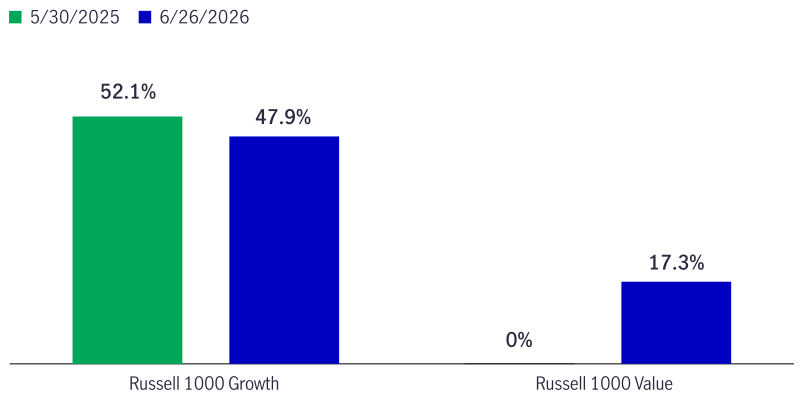
Source: TD securities, Factset, MSIM, as of 6/30/2026. *Estimated post-reconstitution weights based on preliminary data. The Russell 1000 Growth Index tracks the performance of publicly traded large-cap companies in the United States with higher price-to-book ratios and higher forecasted growth values. The Russell 1000 Value Index tracks the performance of publicly traded large-cap companies in the United States with lower price-to-book ratios and lower forecasted growth values. It is not possible to invest directly in an index.
Technology continued its rise within the Russell 1000 Value Benchmark Index, growing from 11.3%1 after the 2025 reconstitution to 17.1% in 2026. In contrast, industrials fell from 15.9% to 12.7%.2 The impact of this is already visible in investor portfolios. For example, technology represented 19.7% of the largest passive ETF tracking the Russell 1000 Value Index as of August 5, 2026. That’s why understanding what sits beneath the benchmark matters just as much as the style label attached to it.
Russell 1000 Value Benchmark Index
What sits beneath the label?
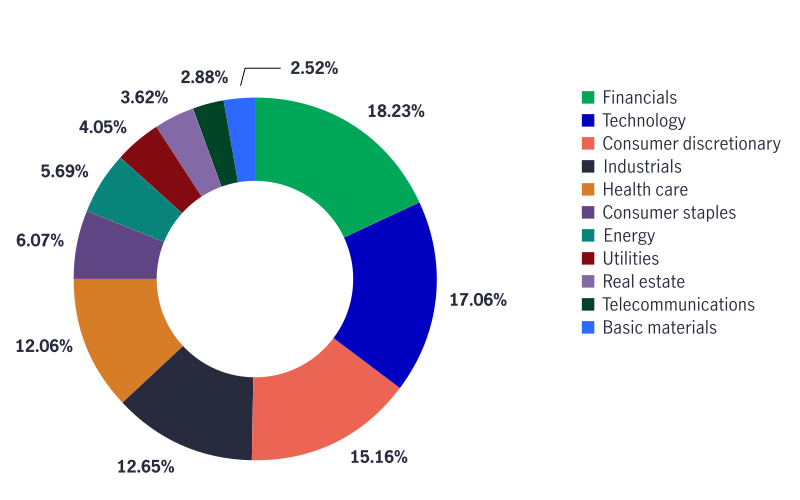
Source: Russell 1000 Value Index factsheet as of 7/31/2026. The Russell 1000 Value Index tracks the performance of publicly traded large-cap companies in the United States with lower price-to-book ratios and lower forecasted growth values. It is not possible to invest directly in an index.
Top 10 index constituents
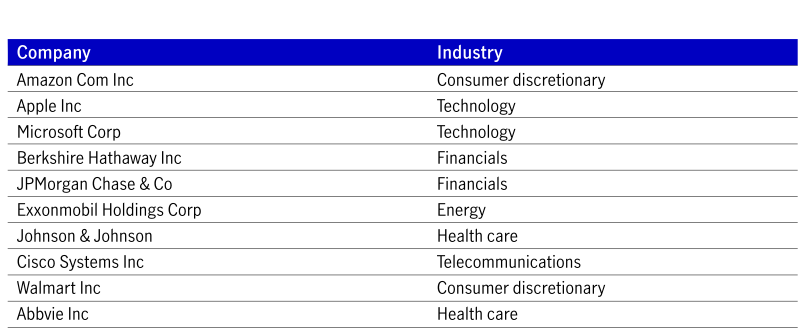
Source: Russell 1000 Value Index factsheet as of 7/31/2026. The Russell 1000 Value Index tracks the performance of publicly traded large-cap companies in the United States with lower price-to-book ratios and lower forecasted growth values. It is not possible to invest directly in an index.
Russell 1000 Growth Benchmark Index
What sits beneath the label?
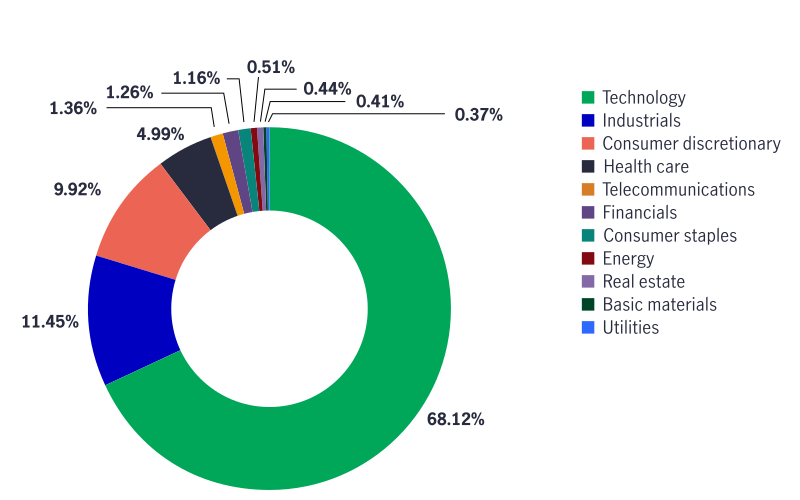
Source: Russell 1000 Growth Benchmark Index factsheet as of 7/31/2026. The Russell 1000 Growth Index tracks the performance of publicly traded large-cap companies in the United States with higher price-to-book ratios and higher forecasted growth values. It is not possible to invest directly in an index.
Top 10 index constituents
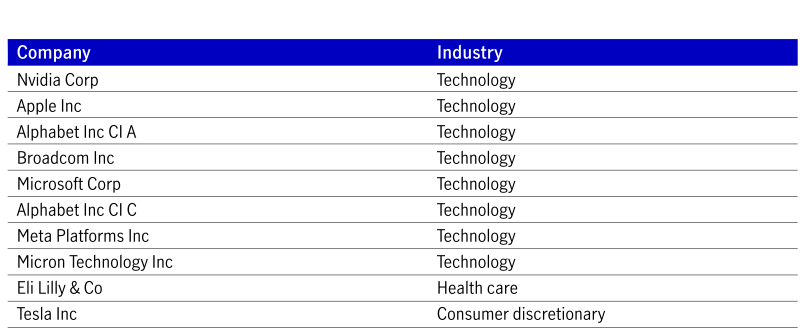
Source: Russell 1000 Growth Benchmark Index factsheet as of 7/31/2026. The Russell 1000 Growth Index tracks the performance of publicly traded large-cap companies in the United States with higher price-to-book ratios and higher forecasted growth values. It is not possible to invest directly in an index.
For advisors, the question isn't what changed in the index. It’s what those changes mean for client portfolios. When growth and value benchmarks begin to share more of the same holdings, style allocations may not be providing the diversification investors expect.
Advisors usually allocate to value with a purpose, i.e. to find attractively valued businesses, diversify away from growth-heavy exposures, or broaden the sources of return in client portfolios. Historically, the distinction between growth and value exposures was often more pronounced.
Today, however, the lines can be less clear. As Apple and Microsoft became among the largest additions to the Russell 1000 Value Benchmark index, some of the market’s largest and most widely owned companies now appear across multiple style categories. The debate isn't whether Apple or Microsoft belongs in a value index. Reasonable investors can hold different views on that question.
The more important question is whether the resulting portfolio still provides the outcome an advisor was seeking when making the allocation.
If a value mandate is intended to complement a growth allocation, reduce concentration, or introduce different drivers of return, advisors should understand whether those objectives are still being achieved.
For advisors, that makes look-through analysis more important than ever.
Where active management can play a role
Active managers can decide whether a stock continues to contribute to the portfolio as originally expected, rather than automatically adjusting exposure as benchmark weights change. Fundamentals, valuation, risk considerations, and portfolio construction objectives can guide their decisions.
Active management is about making sure every holding has a reason to be there and that the overall portfolio still reflects the outcome the client is trying to achieve.
Know what your clients own
The 2026 Russell reconstitution is a useful reminder that portfolio construction can’t stop at the label. Index memberships change, sector weights move, and style definitions evolve. The question for advisors is whether the portfolio still owns what they think it owns.
As style exposures continue to shift, advisors may want to revisit portfolio allocations and reassess the role each allocation is playing within the portfolio.
Curious how your portfolio stacks up? Our Investment Consulting Group offers product-agnostic consultations to help you identify risks and opportunities and assess whether allocations remain aligned with investment goals.
Important disclosures
Important disclosures
The views presented are those of the author(s) and are subject to change. No forecasts are guaranteed. This commentary is provided for informational purposes only and is not an endorsement of any security, mutual fund, sector, or index. Past performance does not guarantee future results.
Diversification does not guarantee a profit or eliminate the risk of a loss.
The Russell 1000 Growth Index tracks the performance of publicly traded large-cap companies in the United States with higher price-to-book ratios and higher forecasted growth values. The Russell 1000 Value Index tracks the performance of publicly traded large-cap companies in the United States with lower price-to-book ratios and lower forecasted growth values. It is not possible to invest directly in an index.
Investing involves risks, including the potential loss of principal. These products carry many individual risks, including some that are unique to each fund. Growth stocks may be more susceptible to earnings disappointments. Value stocks may decline in price.
JHS-987406-2026-08-14 08/26